
Composting 101
How to get started (without turning your backyard into a science experiment)
COMPOSTINGGREEN LIVINGSUSTAINABILITYCARBON FOOTPRINT
Composting is the managed breakdown of organic materials (food scraps, leaves, yard trimmings) in the presence of oxygen, producing a stable, nutrient-rich soil amendment you can use in gardens, lawns, and houseplants.
If you’ve ever looked at a banana peel and thought, “Surely there’s a better ending for you than the landfill,” composting is that better ending.
Why composting is worth it?
Environmental benefits
1) Less methane from landfills
Food waste in landfills breaks down without oxygen and generates methane. EPA research notes that food waste contributes a major share of landfill methane, estimating 58% of fugitive methane emissions from municipal solid waste landfills are from landfilled food waste.
2) Healthier soils = better water resilience
Applying compost helps soil absorb and hold water, reducing erosion and improving drought resilience.
3) Carbon stays in the ground
EPA highlights that applying compost can help store carbon in soils instead of releasing it into the atmosphere.
Financial benefits
1) Reduce trash volume (and sometimes fees)
Composting diverts heavy, wet organics from your trash, meaning fewer bags and less volume overall. EPA also explicitly notes you reduce the volume of materials that might otherwise be landfilled or incinerated.
2) Free “soil upgrade” instead of buying fertilizers
EPA points out a very practical win: you can save money by producing compost, which can reduce your use of fertilizer and pesticides.
You’ve got three solid options—pick the one that matches your space and tolerance for “nature doing nature things."
Option A: Backyard compost pile or bin (best for most households)
Classic, simple, cheap. Great if you have outdoor space.
Option B: Worm composting (vermicomposting) for small spaces
Can be done indoors or outdoors, takes little space, and is designed to be low-odor when maintained properly.
Option C: Community/municipal composting
If you don’t have space, look for curbside pickup or a drop-off program.
Choose your composting style
Step-by-step compost setup guide (backyard pile/bin)
Step 1: Pick a spot that won’t annoy Future You
EPA recommends a location that’s easy to access year-round, has good drainage, and isn’t jammed right up against a fence—bonus points if there’s a water source nearby.
Step 2: Choose your “container”
You can compost as:
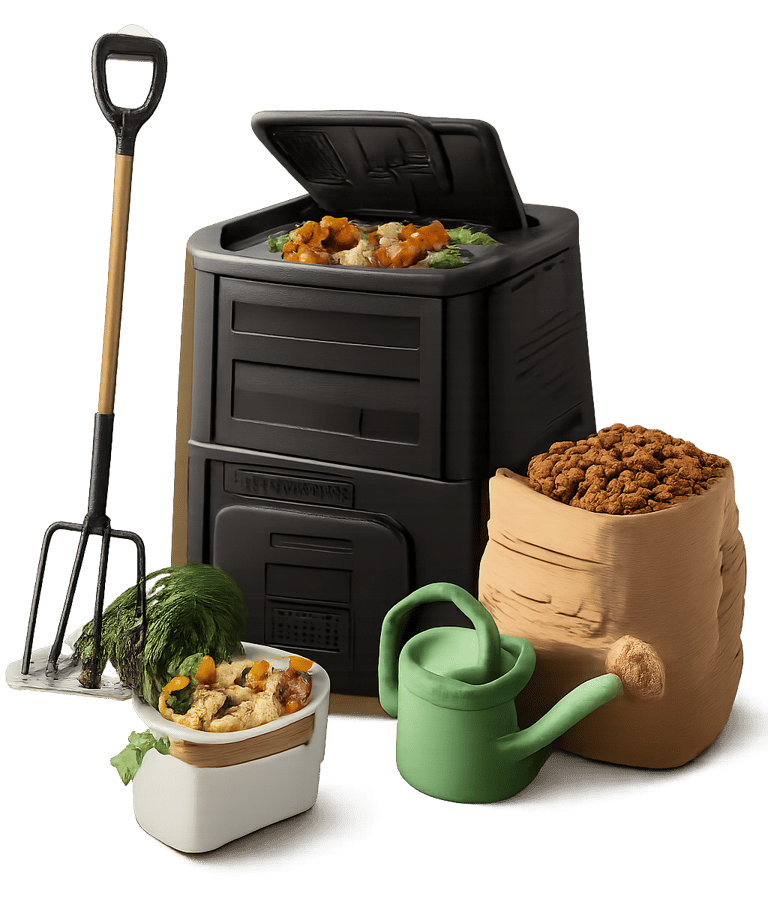
A simple pile
A wire/wood/cinder block bin
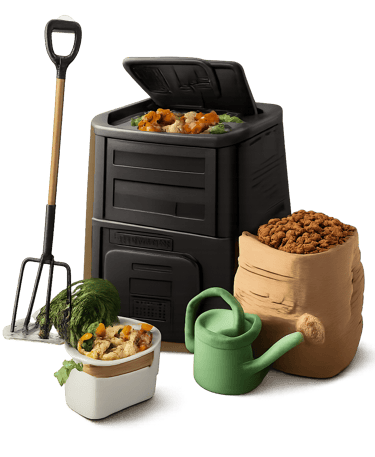
An enclosed bin, barrel, or tumbler
Rule of thumb: if pests are a concern, go enclosed with a lid.
Step 3: Gather your ingredients (this is the whole game)
Composting works when you balance:
Browns (carbon-rich) + Greens (nitrogen-rich)
Moisture (water)
Oxygen (air)
EPA’s practical ratio guidance:
Add 2–3 times the volume of browns to the volume of greens.
Greens (examples): fruit/veg scraps, grass clippings, coffee grounds, tea bags (no staples), crushed eggshells.
Browns (examples): dry leaves, twigs, shredded non-glossy paper/cardboard, untreated wood chips.
Step 4: Start the pile the “no-stink” way
Put down a 4–6 inch base layer of bulky browns (twigs/wood chips) to help airflow and absorb liquid.
Add greens and browns in layers “like lasagna.”
If needed, add water so it’s damp—not swampy.
Moisture test: your pile should feel like a wrung-out sponge.
Cover food scraps: keep scraps buried under 4–8 inches of browns (this matters for pests and odors).
Step 5: Know what not to add (aka “How to not summon raccoons”)
Avoid adding:
Meat, fish, bones
Dairy
Fats/oils/grease
Pet waste / cat litter
Diseased plants, aggressive weeds with seeds, treated wood, glossy paper, etc.
(Those first items are the all-inclusive resort package for pests.)
Step 6: Maintain it (10 minutes here and there)
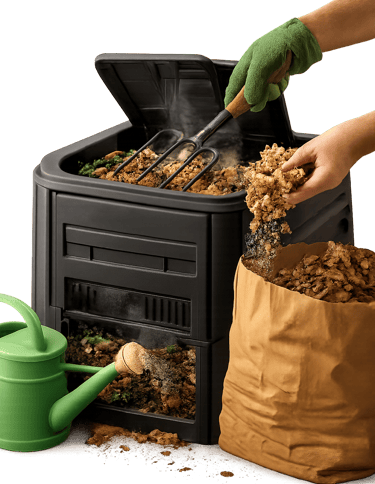
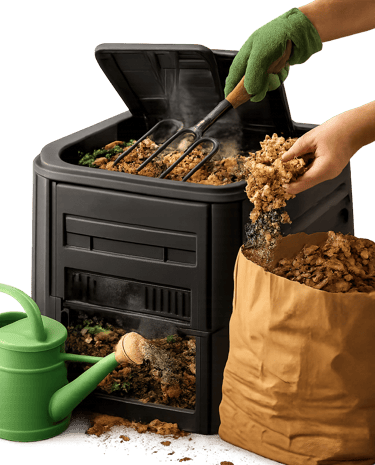
Turn occasionally to add oxygen and speed breakdown.
Watch for:
Too dry? Moisten and turn.
Bad odor? Usually too wet or not enough air—add browns and turn.
Not heating up? Add greens and turn.
Well-maintained backyard compost can reach 130–160°F, which helps reduce pathogens and weed seeds.
Step 7: Harvest finished compost
Your compost is ready when it’s dark, crumbly, smells like soil, and you can’t recognize the original scraps.
EPA notes a maintained pile can finish in about 3–5 months, while a neglected one may take a year.
After it stops heating, let it cure at least four weeks before use.
Quick-start guide for apartments: vermicomposting (worms)
EPA’s basic worm-bin approach:
Use a bin with a tight-fitting lid; add air/drainage holes as instructed.
Add damp shredded bedding (non-glossy paper/cardboard) and a bit of soil.
Use red wigglers (Eisenia fetida)—not random yard worms.
Feed mostly fruit/veg scraps and cover scraps with bedding each time.
Where EcoSquad can help (so this actually sticks)
If you want composting to become a habit—not a half-finished “yard project”—EcoSquad can:
Do a quick home walk-through to pick the best location and bin type
Set you up with a “greens/browns” plan based on your household’s real waste
Tune the system for odor/pest prevention (cover depth, airflow, moisture)
Connect you to local drop-offs or community composting if home composting isn’t practical US EPA
Citations
1) US EPA — Composting At Home
https://www.epa.gov/recycle/composting-home
2) US EPA — Quantifying Methane Emissions from Landfilled Food Waste
https://www.epa.gov/land-research/quantifying-methane-emissions-landfilled-food-waste
3) US EPA — Composting Food Waste: Keeping a Good Thing Going (methane + aerobic composting)
https://www.epa.gov/snep/composting-food-waste-keeping-good-thing-going
4) USDA NRCS — Soil Health (water retention, soil function)
https://www.nrcs.usda.gov/conservation-basics/natural-resource-concerns/soil/soil-health
5) US EPA — Benefits of Using Compost
https://www.epa.gov/sustainable-management-food/benefits-using-compost



Contact
Get in touch for a greener tomorrow
Phone
© 2025. All rights reserved.
Join EcoSquad
Get tips and updates for greener living.