
Recycling Made Simple: Big Benefits, Small Habit
Recycling is one of those rare “adulting wins” that’s good for your wallet, your community, and the environment—and it doesn’t require a lifestyle overhaul.
RECYCLINGGREEN LIVINGSUSTAINABILITY
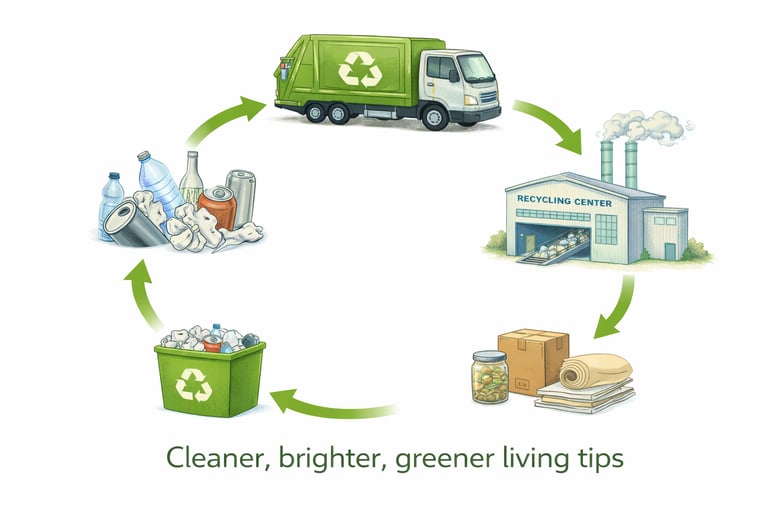
Recycling is one of those rare “adulting wins” that’s good for your wallet, your community, and the environment—and it doesn’t require a lifestyle overhaul. It’s simply the process of collecting and processing materials that would otherwise be trashed and turning them into new products.
The best part? Once you set up a basic system at home, recycling becomes almost automatic.
The benefits of recycling
1) Environmental benefits
Less waste sent to landfills and incinerators
Recycling reduces the amount of material that ends up in landfills or incinerators.
Conserves natural resources
Using recycled feedstock reduces the need to extract and process raw materials like timber, water, and minerals.
Reduces pollution and greenhouse gas emissions
By reducing the need to mine and process virgin raw materials, recycling can help prevent pollution and reduce greenhouse gas emissions.
2) Economic benefits (yes, for real people)
Saves energy during manufacturing
Making products from recycled materials generally uses less energy than making the same products from virgin materials.
A huge example: aluminum
Recycling aluminum can save about 95% of the energy required to make aluminum from raw ore—one of the strongest “bang for your buck” recycling cases.
Strengthens material supply and local economies
EPA notes recycling increases economic security by using a domestic source of materials, and it saves energy (which reduces costs across supply chains).
Why recycling feels “hard” (and how to make it easy)
Recycling usually breaks down for two reasons:
People aren’t sure what’s accepted locally.
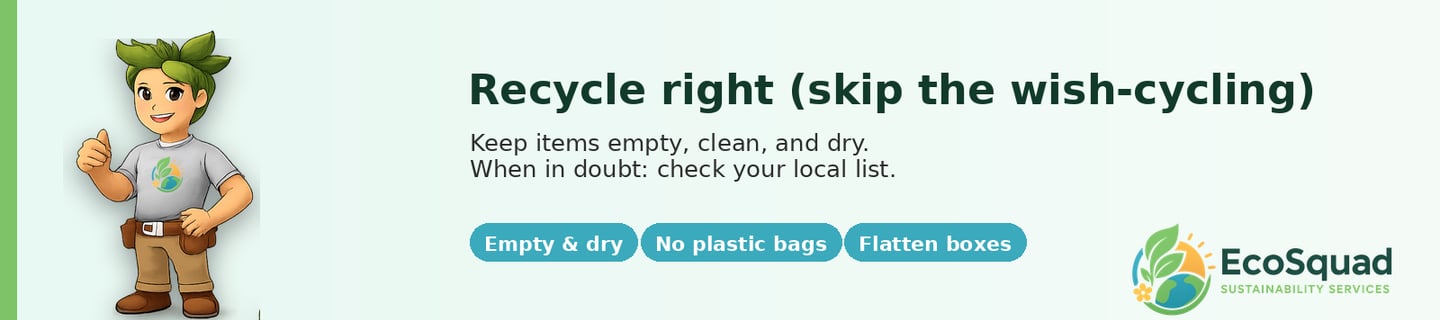
“Contamination” (food/liquid residue, plastic bags, weird items) causes confusion.
The fix is simple: follow a few universal rules and check your local program for details.
EPA also offers specific guidance on how to recycle common items, including practical cleanliness standards—like “spatula-clean” being good enough for many containers.
A simple, no-drama recycling routine (5 steps)
Step 1: Set up a 2-bin system
Bin 1: Recycling (paper/cardboard + containers)
Bin 2: Trash
Optional: Bin 3: Compost, if you’re doing organics too.
Put the recycling bin where trash happens: kitchen, garage, laundry, wherever your life actually occurs.
Step 2: Keep it empty of food and liquid
Quick rinse or scrape is fine. If it’s still full of food, it likely doesn’t belong in recycling. EPA’s guidance emphasizes cleaning enough so it’s recyclable.
Step 3: Recycle the “core four” confidently
Most programs accept some version of:
Paper
Cardboard (flatten it)
Cans
Bottles/containers
EPA’s “How do I recycle common recyclables?” page walks through many of these categories and what to watch out for.
Step 4: Stop “wish-cycling”
If you’re not sure, don’t toss it in and hope for the best. Look up your local recycling list (often called “accepted materials”) and follow that.
Step 5: Make drop-offs painless (for special items)
Some things usually require drop-off (depending on your area): electronics, batteries, plastic film, hazardous materials. The easiest method is to keep a small “drop-off box” in a closet and empty it monthly.
Bonus: Measure your impact (if you like numbers)
EPA’s Waste Reduction Model (WARM) is designed to estimate greenhouse gas reductions, energy savings, and economic impacts of recycling versus landfilling (screening-level comparisons). US EPA+1
Translation: if you want to quantify your impact, there are legit tools for it.
How EcoSquad can help (so it stays easy)
Recycling is simple—until real life happens. EcoSquad can make it frictionless by:
Setting up a home recycling system that fits your space (kitchen/garage/utility flow)
Providing a custom “what goes where” guide aligned to your local hauler’s rules
Helping reduce contamination with container labels, bin placement, and quick-clean tips
Creating a monthly “drop-off plan” for the awkward stuff (batteries, e-waste, film plastics)
If you want recycling to feel effortless, EcoSquad can turn it into a one-time setup that keeps working.
Citations
US EPA — Recycling Basics and Benefits
https://www.epa.gov/recycle/recycling-basics-and-benefitsUS EPA — The U.S. Recycling System
https://www.epa.gov/circulareconomy/us-recycling-systemUS EPA — How Do I Recycle Common Recyclables
https://www.epa.gov/recycle/how-do-i-recycle-common-recyclablesUS EPA — Waste Reduction Model (WARM)
https://www.epa.gov/waste-reduction-modelUS EPA — Basic Information about the Waste Reduction Model
https://www.epa.gov/waste-reduction-model/basic-information-about-waste-reduction-modelU.S. Energy Information Administration (EIA) — Recycling and energy
https://www.eia.gov/energyexplained/energy-and-the-environment/recycling-and-energy.phpAluminum Association — Recycling (energy savings for recycled aluminum)
https://www.aluminum.org/Recycling


Contact
Get in touch for a greener tomorrow
Phone
© 2025. All rights reserved.
Join EcoSquad
Get tips and updates for greener living.